
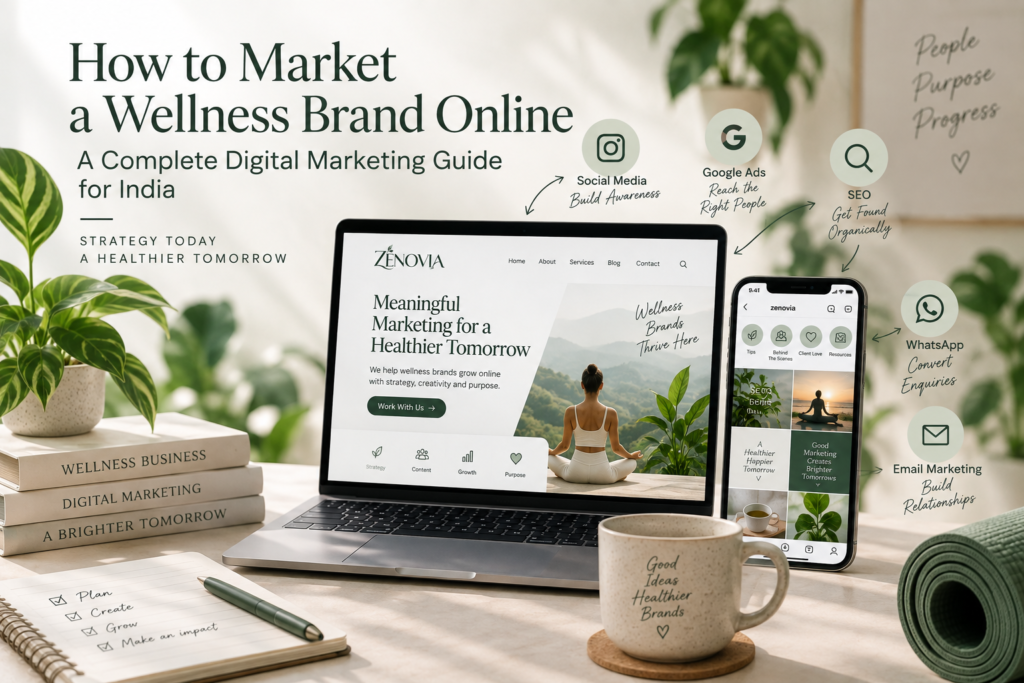
The wellness industry in India is growing rapidly, but building a successful wellness brand takes more than simply posting on Instagram.
Whether you run a yoga studio, meditation practice, wellness coaching business, holistic therapy service, fitness brand or healthy food business, digital marketing can help you reach the right audience, build trust and turn attention into meaningful business results.
India had around 1.03 billion internet users and 500 million social media user identities in late 2025, according to DataReportal’s Digital 2026 India report.
For wellness brands, that creates a huge opportunity—but also more competition for people’s attention.
So how should you market a wellness brand online?
Let’s break it down.
1. Start With a Clear Brand Position
Before running advertisements or creating content, make sure people understand what your brand actually offers.
Ask:
- Who do you help?
- What problem do you solve?
- What makes your approach different?
- What result can customers realistically expect?
- Why should someone trust you?
For example, instead of simply saying:
“We offer yoga classes.”
A clearer position might be:
“Online yoga programs designed for busy working professionals who want to build a consistent mindfulness and movement practice.”
Specific messaging makes it easier for the right audience to recognise that your brand is relevant to them.
2. Build a Professional Website
Your website should be the central home of your digital marketing efforts.
Social media can help people discover you, but your website gives potential customers a place to learn more about your brand and take action.
A wellness website should clearly communicate:
- What you offer
- Who it’s for
- Your experience or credentials
- Services or products
- Customer testimonials
- Frequently asked questions
- Contact information
- A clear call to action
Your website should also work well on mobile devices, since mobile is a major part of India’s digital ecosystem.
3. Use SEO to Get Found on Google
Search engine optimisation can help potential customers discover your brand when they’re actively looking for solutions.
Instead of creating content simply to include keywords, focus on answering genuine customer questions.
For example, a meditation teacher could create content around:
- How to start meditation for beginners
- How long should you meditate?
- Meditation for workplace stress
- Morning meditation routines
- Guided meditation for beginners
Google’s current guidance specifically recommends helpful, reliable, people-first content rather than content created primarily to manipulate search rankings.
For wellness brands, this is particularly important because health and wellbeing information can significantly affect people’s decisions.
4. Make Instagram Part of Your Strategy
Instagram can be an important discovery and community-building channel for wellness brands.
You can use:
Reels for reach and discovery.
Carousels for education.
Stories for conversations and relationship building.
Testimonials and customer stories for social proof.
Behind-the-scenes content to make your brand more human.
But don’t make every post promotional.
A useful content mix could include:
- Educational content
- Practical tips
- Inspirational content
- Frequently asked questions
- Behind-the-scenes content
- Customer experiences
- Product or service information
- Occasional promotional offers
The goal is to build familiarity and trust before asking someone to buy.
5. Create Content That Educates
Wellness customers often need information before they’re ready to make a decision.
That makes educational content particularly valuable.
For example, a healthy food brand could create:
“5 easy ways to add more millets to your breakfast.”
A yoga instructor could create:
“3 stretches to try after sitting at a desk all day.”
A wellness coach could create:
“What is the difference between stress and burnout?”
The important point is to provide genuine value rather than creating content simply because you need something to post.
Google also recommends demonstrating original information, expertise and useful depth in content.
6. Use WhatsApp to Build Relationships
For many Indian businesses, WhatsApp can be a practical channel for enquiries, follow-ups and customer communication.
For example:
Instagram → WhatsApp enquiry → Consultation → Customer
or
Google Search → Website → WhatsApp → Booking
Make the next step obvious.
Instead of simply writing:
“Contact us.”
you could use:
“Message us on WhatsApp to book your introductory consultation.”
The easier you make the journey, the less likely potential customers are to drop off.
7. Consider Google Ads for High-Intent Customers
Organic marketing takes time.
Paid advertising can help brands reach people who are already searching for specific products or services.
For example:
- “Yoga classes near me”
- “Online meditation classes”
- “Wellness coach India”
- “Holistic therapy online”
- “Healthy snacks online”
Google Search Ads can be particularly useful when there is clear search intent.
The key is not simply to generate clicks. Your landing page, offer, messaging and conversion process all need to work together.
8. Don’t Ignore Local SEO
If your wellness business serves customers in a particular city or physical location, Google Business Profile can be an important part of your online presence.
Google says Business Profiles can help eligible businesses appear on Google Search and Maps, while accurate and complete information can support local visibility.
Keep your:
- Business name
- Location
- Phone number
- Website
- Opening hours
- Services
- Photos
accurate and updated.
Encourage genuine customers to leave reviews and respond professionally to them.
9. Build an Email List
Social media audiences are valuable, but building an email list gives your brand another direct communication channel.
You could offer something useful in exchange for an email address:
- A beginner’s wellness guide
- Meditation checklist
- 7-day wellness routine
- Healthy recipe guide
- Free consultation
- Wellness newsletter
Then provide useful content consistently rather than sending promotional messages every time.
10. Measure What Actually Matters
Followers and likes can be useful indicators, but they aren’t the whole picture.
Track metrics such as:
- Website traffic
- Enquiries
- WhatsApp conversations
- Consultation bookings
- Leads
- Sales
- Cost per lead
- Conversion rate
- Return on advertising spend
For example, imagine one Instagram post gets 10,000 views but generates no enquiries, while another gets 2,000 views and produces five consultation requests.
Reach alone doesn’t tell the whole story.
Your marketing should ultimately connect attention with business outcomes.
A Simple Digital Marketing Funnel for a Wellness Brand
A wellness brand can build a simple journey like this:
DISCOVER
Instagram Reels + Google Search + Educational Content
↓
LEARN
Website + Blog + Social Media + Testimonials
↓
TRUST
Expert Content + Reviews + Stories + Email
↓
ACT
WhatsApp + Consultation + Booking + Purchase
↓
RETURN
Follow-up + Email + Community + Valuable Content
This approach turns individual marketing activities into a connected customer journey.
Final Thoughts
Marketing a wellness brand online isn’t about being everywhere.
It’s about being useful, trustworthy and visible in the places where your ideal customers are already looking.
Start with a clear brand position. Build a strong website. Create helpful content. Use SEO to capture search demand. Build relationships through social media and WhatsApp. Use paid advertising when appropriate, and measure the results.
Most importantly, remember that wellness marketing is ultimately about people.
When your digital strategy helps the right people understand your brand, trust your expertise and take the next step, marketing becomes more than promotion.
It becomes a bridge between your purpose and the people who need what you offer.