
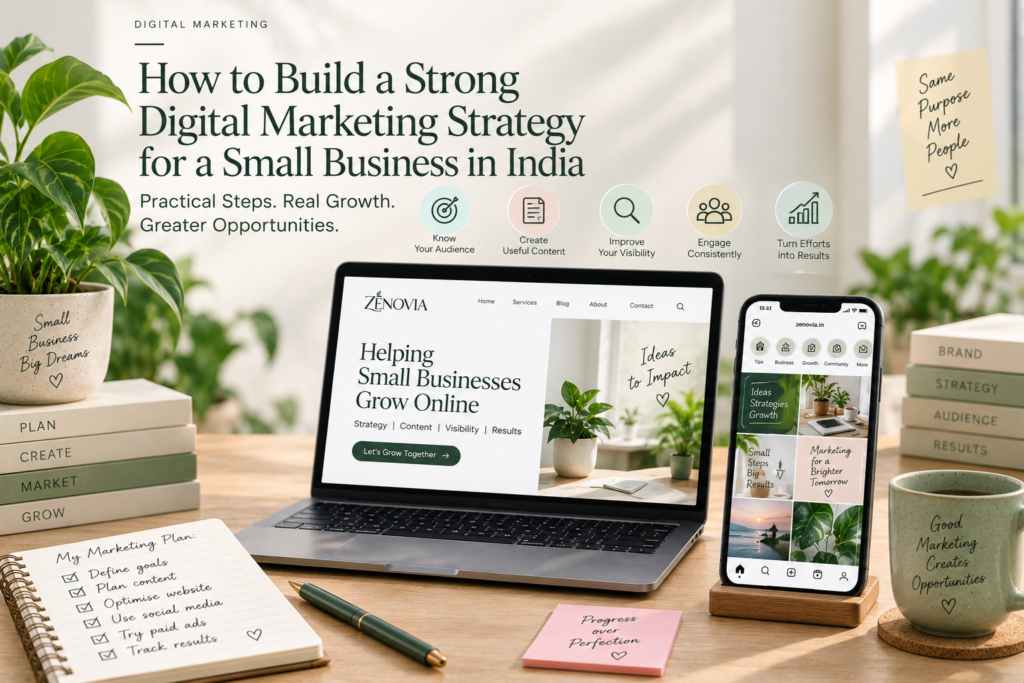
Starting a small business is exciting, but getting people to discover it can be challenging.
You may have a great product or service, but if your ideal customers don’t know you exist, growth becomes difficult.
This is where digital marketing can help.
The good news is that small businesses don’t need to be present on every platform or spend huge amounts on advertising.
What they need is a clear strategy.
1. Know Your Ideal Customer
Before creating content or running ads, understand who you’re trying to reach.
Ask:
- Who is my ideal customer?
- What problem are they trying to solve?
- What do they value?
- Where do they spend time online?
- What questions do they ask before buying?
For example, a wellness business targeting working professionals will communicate differently from one targeting young parents.
The clearer your audience, the easier it becomes to create relevant marketing.
2. Define a Clear Marketing Goal
Don’t begin with:
“I want more followers.”
Instead, identify what you actually want to achieve.
Your goal might be:
- Generate enquiries
- Increase website traffic
- Get more bookings
- Increase online sales
- Build brand awareness
- Grow an email list
A clear objective makes it easier to decide which channels and content to use.
3. Build a Strong Online Presence
Your digital presence should make it easy for people to understand your business.
At a minimum, make sure your:
- Website
- Google Business Profile
- Instagram profile
- Contact information
- WhatsApp Business
are accurate and consistent.
Your website should clearly explain what you offer, who you help and what visitors should do next.
4. Use Social Media With a Purpose
You don’t need to post everywhere.
Choose the platforms where your target audience is most relevant.
For many small businesses, Instagram can be useful for:
Reels → Reach and discovery
Carousels → Education
Stories → Engagement and relationships
Testimonials → Social proof
Product or service posts → Conversion
Instead of asking, “What should I post today?”, create a few content pillars and plan around them.
5. Create Helpful Content
Good content answers questions your potential customers already have.
For example, a fitness business could create:
“3 mistakes beginners make at the gym.”
A healthy food brand could create:
“Easy ways to include millets in your daily meals.”
A digital marketing agency could create:
“Why your Instagram posts aren’t generating enquiries.”
Useful content can help establish familiarity and demonstrate expertise before someone becomes a customer.
6. Make SEO Part of the Strategy
Search engine optimisation can help your business become discoverable when people are looking for relevant information, products or services.
Start with simple steps:
- Research relevant search terms
- Create useful website content
- Optimise page titles and headings
- Write helpful blog posts
- Improve internal linking
- Keep important business information clear
Don’t create content only for search engines.
Create it for the person who is searching.
7. Use Paid Advertising Carefully
Paid advertising can help small businesses reach potential customers faster, but spending money without a strategy can become expensive.
Before running an ad, decide:
Who are you targeting?
What are you offering?
What action should they take?
Where will they go after clicking?
Your landing page and conversion process are just as important as the advertisement itself.
Start with a manageable budget, measure the results and optimise based on actual performance.
8. Make WhatsApp Part of the Customer Journey
For many small businesses, WhatsApp can make it easier for interested people to ask questions and take the next step.
A simple journey could be:
Instagram → WhatsApp → Enquiry → Consultation → Customer
or:
Google → Website → WhatsApp → Purchase
Make the next action obvious and easy.
9. Measure What Matters
Digital marketing gives you the ability to measure performance.
Track metrics that relate to your goals, such as:
- Website visitors
- Leads
- Enquiries
- Bookings
- Sales
- Conversion rate
- Cost per lead
- Customer acquisition cost
Don’t focus only on likes and followers.
A smaller audience that consistently generates customers can be more valuable to a business than a large audience that never takes action.
10. Keep Improving
Digital marketing isn’t something you set up once and forget.
Review your results regularly.
Ask:
What worked?
What didn’t?
Which content attracted the right audience?
Which channel generated enquiries?
Where did potential customers drop off?
Use these insights to improve your next campaign, content plan or offer.
Final Thoughts
A successful digital marketing strategy doesn’t have to be complicated.
Start with your audience. Define your goal. Build a clear online presence. Create useful content, use SEO, choose the right social platforms and introduce paid advertising when it makes sense.
Most importantly, connect all these activities to a clear customer journey.
Discover → Learn → Trust → Act → Return
When every part of your marketing works towards that journey, even a small business can build a stronger and more consistent digital presence.
Good marketing isn’t about doing everything. It’s about doing the right things with purpose.