
Coming up with new content every day can quickly become overwhelming.
One day you may have plenty of ideas, and the next day you may find yourself staring at a blank screen wondering, “What should I post today?”
A content calendar can solve this problem.
Instead of creating content randomly, you can plan your topics, formats and goals in advance.
For a wellness brand, a simple 30-day content calendar can help you stay consistent while educating your audience, building trust and promoting your products or services.
1. Start With Your Content Goals
Before planning 30 posts, decide what you want your content to achieve.
Your goals could include:
- Building brand awareness
- Educating your audience
- Increasing engagement
- Generating enquiries
- Promoting products or services
- Building a community
Your content should support these goals rather than simply filling your social media feed.
2. Choose Your Content Pillars
Content pillars are the main topics your brand regularly talks about.
For a wellness brand, five useful pillars could be:
Education
Share useful information and practical tips.
Inspiration
Share positive ideas, stories and encouragement.
Community
Ask questions, run polls and encourage conversations.
Behind the Scenes
Show the people and processes behind your brand.
Promotion
Introduce your products, services, offers or consultations.
These pillars make content planning much easier.
3. Mix Different Content Formats
Don’t publish the same type of post every day.
Create variety using:
- Reels
- Carousels
- Single-image posts
- Stories
- Educational videos
- Customer testimonials
- FAQs
For example, one week could include three Reels, two carousels, one promotional post and several Stories.
The exact mix should depend on your audience and what your performance data shows.
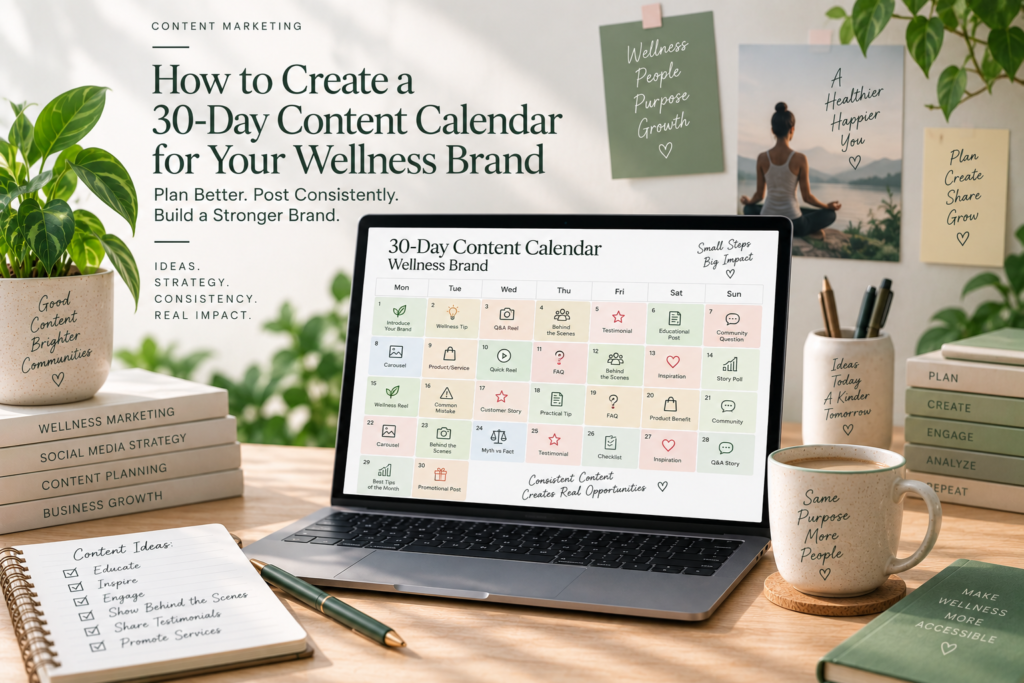
4. Build Your 30-Day Calendar
Here’s a simple example:
Day 1: Introduce your brand
Day 2: Educational tip
Day 3: Reel answering a common question
Day 4: Behind-the-scenes content
Day 5: Customer testimonial
Day 6: Wellness tip
Day 7: Community question
Day 8: Educational carousel
Day 9: Product or service introduction
Day 10: Quick Reel
Day 11: Frequently asked question
Day 12: Behind-the-scenes post
Day 13: Inspirational content
Day 14: Story poll
Day 15: Educational Reel
Day 16: Common mistake
Day 17: Customer story
Day 18: Practical tip
Day 19: FAQ
Day 20: Product/service benefit
Day 21: Community conversation
Day 22: Educational carousel
Day 23: Behind-the-scenes Reel
Day 24: Myth vs fact
Day 25: Customer testimonial
Day 26: Helpful checklist
Day 27: Inspirational post
Day 28: Story Q&A
Day 29: Best tips of the month
Day 30: Clear promotional or consultation post
This gives your audience variety without making content creation chaotic.
5. Create Content Around Real Questions
One of the easiest ways to find content ideas is to listen to your customers.
Look at:
- Frequently asked questions
- Instagram comments
- WhatsApp enquiries
- Customer conversations
- Search queries
- Common problems in your industry
If several people ask the same question, it could become a Reel, carousel, blog post or email.
This creates content based on real audience needs rather than random ideas.
6. Don’t Sell in Every Post
A common mistake is making every post promotional.
If every piece of content says “Buy now”, people may lose interest.
Instead, think about the customer journey:
Educate → Engage → Build Trust → Promote → Convert
Your promotional content becomes more meaningful when your audience already understands and trusts your brand.
7. Repurpose Your Best Content
You don’t need to create something completely new every time.
One useful topic can become several pieces of content.
For example:
Blog:
“5 Benefits of a Consistent Meditation Practice”
↓
Instagram Carousel:
“5 Meditation Tips for Beginners”
↓
Reel:
“One Meditation Mistake Beginners Make”
↓
Story:
“Do you meditate regularly?”
↓
Email:
“Your Simple Meditation Guide”
One idea can therefore become an entire content series.
8. Review Your Results
At the end of the month, look at your content performance.
Ask:
- Which posts received the most engagement?
- Which Reels reached new people?
- Which posts generated website visits?
- Which content created enquiries?
- Which topics received saves or shares?
Use these insights to plan the next month.
Your content calendar should evolve based on what your audience actually responds to.
Final Thoughts
A content calendar isn’t about planning every post perfectly.
It’s about creating enough structure to stay consistent while leaving room for creativity and timely content.
Start with a few clear content pillars. Mix educational, inspirational, community and promotional content. Answer real customer questions and repurpose your strongest ideas.
Most importantly, remember:
You don’t need to create more content. You need to create more meaningful content.
A thoughtful 30-day content plan can help your wellness brand stay visible, build trust and turn social media attention into meaningful business relationships.